
How Gold Coins Can Be a Hedge Against Inflation
What is Inflation?
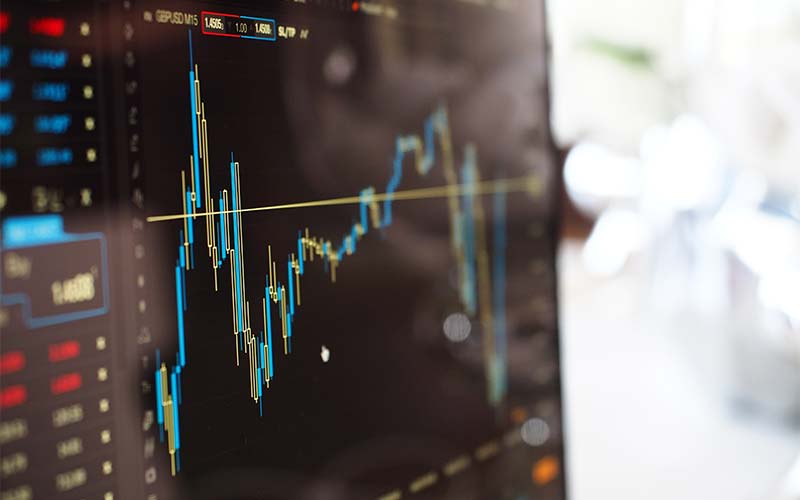
The concept of inflation occurs as a natural economic phenomenon. If we live in a perfect world, work wages will also rise as these prices increase to help cover the increasing costs and maintain people’s high standard of living.
But because we don’t live in a perfect world, the increasing living costs often negatively affect a person’s buying power when wages are not raised. Because of inflation, a person may no longer be able to purchase the goods and services they once could.
Furthermore, the profitability of bank accounts and bonds are also negatively affected by inflation and hyperinflation, or the rapid increase of general prices in the economy.
Central banks often deal with inflation by increasing interest rates to prevent the pumping of large quantities of dollars into the economy and the diminishing value of money. However, even when raising interest rates appear to boost savings, inflation may continue to harm bond funds and savings accounts over time.
Let’s take for example, a savings account with $1,000 can buy goods worth $800. If in ten years, inflation causes the price of those same goods to increase to $1,500, and the savings account only has a 2% interest rate, a person will still lose $300 even with the given increased interest rate. These asset classes, along with a wage that does not increase at the same rate of inflation, will be negatively affected by inflation or hyperinflation.
The Link Between Inflation and Gold
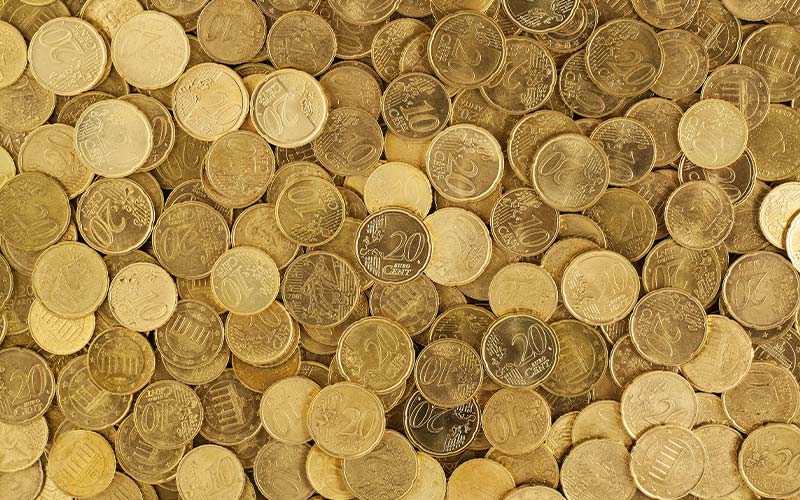
Central banks only print more currency when they have proved that the economy needs extra money for it to grow and stimulate loans. Producing more paper currency signifies a significant increase in the dollar supply in the economy. Without an increase in the demand for dollars in a successful economy, the value of a dollar will gradually diminish over time.
On the other hand, gold is highly valuable because of its rarity and many uses in the modern world. Gold can be used to make jewelry, commemorative coins, and bars. The value of gold is also intrinsically high because it is a highly conductive metal that is useful in several industrial and electronic applications.
Gold also has a symbolic value that makes it highly valued and sought after. For thousands of years, gold has been used as currency and a sign of wealth, so there is enough reason to believe that its value will not decrease anytime soon.
When the economy is unstable, or in times of recession, during which the value of dollar nosedives, investors look for stable, solid investments as a means of storing their wealth, so they turn to physical gold and silver. This increases the demand for these precious metals, and subsequently its price. As a result, investors have a hedge against inflation and the decreasing value of the dollar.
This countercyclical relationship between gold and inflation is the main reason why so many investors prefer to diversify their portfolios by buying precious metals.
The Future of Gold
The value of silver tends to fluctuate more than gold because of the many industrial applications of the metal that directly tie it to the wealth of numerous industries. Other rare metals like platinum and palladium that people also invest in as a hedge against inflation also have fluctuating values.
Inflation-Proof Portfolio
Like any other form of risk, inflation can severely affect your portfolio. The diminishing value of the dollar can put a constraint on stocks, savings accounts, and bond holdings. But buying precious metals like gold and silver can help you safely avoid these deadfalls, keeping you immune from the harmful effects of inflation and hyperinflation. If you are aiming to diversify your portfolio to make it more inflation-proof, gold and silver coins should be a new segment in your portfolio.
If you are looking to buy precious metals in Brookhaven, MS, contact Jim McKennon today! We are a reputable dealer that sells pre- 1933 silver dollars with an oz of silver, and pre- 1933 $5.00 gold coins with 1/4 oz of gold. For more information, please send us a message at jim.mckennon@gmail.com today.